
Example of Drain Calculations According to API 650
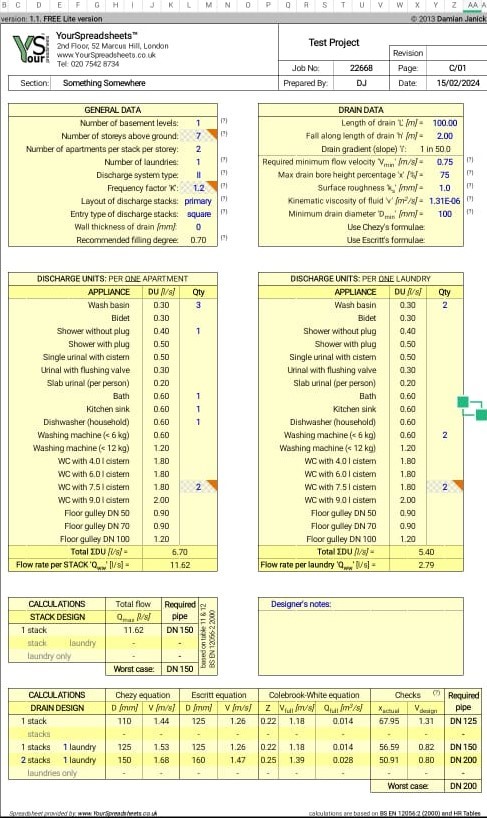
Image source : yourspreadsheets.co.uk/drainagehtml
In the context of API 650 which is the American petroleum institute standard for atmospheric storage tanks, the importance parameters in drain calculations
1] Drain size and Location:
Determine the appreciate size and the location for the drain to facilitate effective drainage
2] Drain Size and Location:
The standard specifies the minimum size of the tank drain and its location. Proper sizing and location are crucial for effective draining of the tank.
3] Slope of the Tank Bottom:
The slope of the tank bottom is important for efficient drainage. API 650 provides guidelines for the minimum slope to ensure proper drainage of the tank.
4] Minimum Height of the Drain Opening:
API 650 specifies the minimum height above the tank bottom for the drain opening. This ensures that any settled water or sediment is effectively drained.
5] Sump Dimensions:
If a sump is used, API 650 provides guidelines on the dimensions of the sump, including its diameter and depth. Sump design is critical for proper drainage.
6] Puddle Flanges:
Puddle flanges are sometimes required to prevent the accumulation of water or other liquids around the tank base. API 650 provides guidance on the use of puddle flanges.
7] Tank Settlement:
Settlement of the tank can impact the drainage system. API 650 includes considerations for settlement, and it’s essential to account for settlement in drain calculations.
8] Freeboard:
Freeboard is the distance between the liquid level and the top of the tank. While not directly related to drain calculations, maintaining proper freeboard is important for overall tank safety.
9] Tank Sloshing:
If the tank is designed for seismic loads, the sloshing of liquid inside the tank during an earthquake can affect drainage. Proper consideration is needed to ensure effective draining even under seismic conditions.
In the context of API 650 which is the American petroleum institute standard for atmospheric storage tanks, the importance parameters in drain calculations
1] Drain size and Location:
Determine the appreciate size and the location for the drain to facilitate effective drainage
2] Drain Size and Location:
The standard specifies the minimum size of the tank drain and its location. Proper sizing and location are crucial for effective draining of the tank.
3] Slope of the Tank Bottom:
The slope of the tank bottom is important for efficient drainage. API 650 provides guidelines for the minimum slope to ensure proper drainage of the tank.
4] Minimum Height of the Drain Opening:
API 650 specifies the minimum height above the tank bottom for the drain opening. This ensures that any settled water or sediment is effectively drained.
5] Sump Dimensions:
If a sump is used, API 650 provides guidelines on the dimensions of the sump, including its diameter and depth. Sump design is critical for proper drainage.
6] Puddle Flanges:
Puddle flanges are sometimes required to prevent the accumulation of water or other liquids around the tank base. API 650 provides guidance on the use of puddle flanges.
7] Tank Settlement:
Settlement of the tank can impact the drainage system. API 650 includes considerations for settlement, and it’s essential to account for settlement in drain calculations.
8] Freeboard:
Freeboard is the distance between the liquid level and the top of the tank. While not directly related to drain calculations, maintaining proper freeboard is important for overall tank safety.
9] Tank Sloshing:
Issues in Drain Calculation Excel Sheet
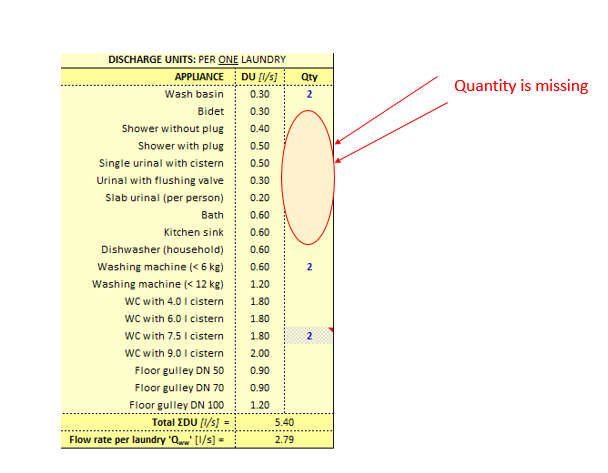
1) Quantity missing from Discharge unit Table
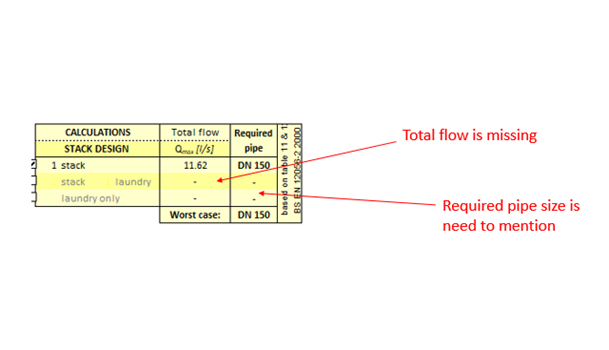
2 ) In the calculation table total flow and required pipe size is missing.
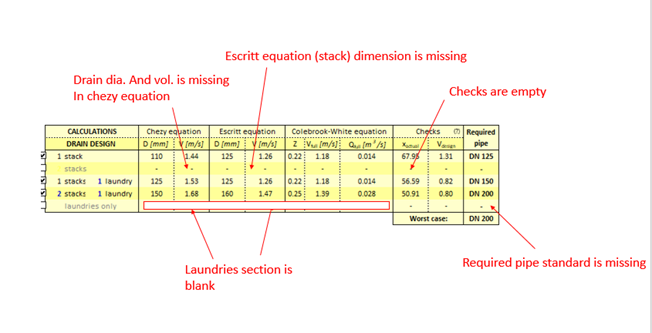
3) Drain dia. Vol. is missing in chezy equation.
4) the Escritt equation (stack) dimensions are missing
5) Checks is empty
6) Laundries section is blank in all calculations
7) The pipe standard is missing.
Issue and solutions according to API 650
1. Inadequate Drainage:
Issue: The drainage system may be insufficient to handle the potential accumulation of water, rain, or other liquids within the tank.
Solution: Review and ensure that the drain size, location, and slope meet the API 650 specifications. Adjust the design if necessary to improve drainage capacity.
2. Sediment Accumulation:
Issue: Sediment may accumulate within the tank, affecting the efficiency of the drainage system.
Solution: Consider installing additional features such as sumps or sediment traps to facilitate the removal of settled material. Regular tank inspections and maintenance should be performed to prevent excessive sediment buildup.
3. Improper Slope or Settlement Issues:
Issue: The tank bottom slope may not be adequate, or settlement issues may impact drainage performance.
Solution: Ensure that the tank bottom slope complies with API 650 recommendations. Address settlement concerns by incorporating proper foundation design measures or adjusting the drainage system accordingly.
4. Ineffective Sump Design:
Issue: If a sump is used, its design may not be effective in collecting and draining liquids.
Solution: Review sump dimensions and configurations. Ensure that the sump is appropriately sized and positioned to capture liquids effectively. Check for any blockages or obstructions in the sump.
5. Puddle Formation:
Issue: Puddles around the tank base may form, leading to potential corrosion or safety hazards.
Solution: Implement measures such as puddle flanges as recommended by API 650. Adequately design the foundation and grading around the tank to prevent puddle formation.
6. Freeboard and Overflow Issues:
Issue: Insufficient freeboard or inadequate provision for overflow may result in spillage.
Solution: Ensure that the tank has the required freeboard as per API 650 specifications. Install overflow provisions to handle excess liquid in case of overfilling.
7. Lack of Regular Inspections:
Issue: Infrequent inspections may lead to undetected drainage system issues over time.
Solution: Establish a routine inspection and maintenance schedule to identify and address any drainage-related problems promptly.
8. Environmental Considerations:
Issue: Environmental factors such as seismic activity or extreme weather conditions may not have been adequately considered in the drainage system design.
Solution: Review and incorporate seismic design considerations if applicable. Ensure the drainage system is resilient to adverse weather conditions.
Conclusion
the drain calculation process according to API 650 is a comprehensive approach that addresses various factors to guarantee the efficient and safe drainage of storage tanks. Designers, engineers, and operators should carefully follow API 650 guidelines, perform thorough calculations, and conduct regular inspections to maintain the integrity and reliability of storage tank drainage systems.
Get detailed/ Get files/ Get customized/ Get trained by click link given here https://shreeaasaantech.com/contact-us/


