
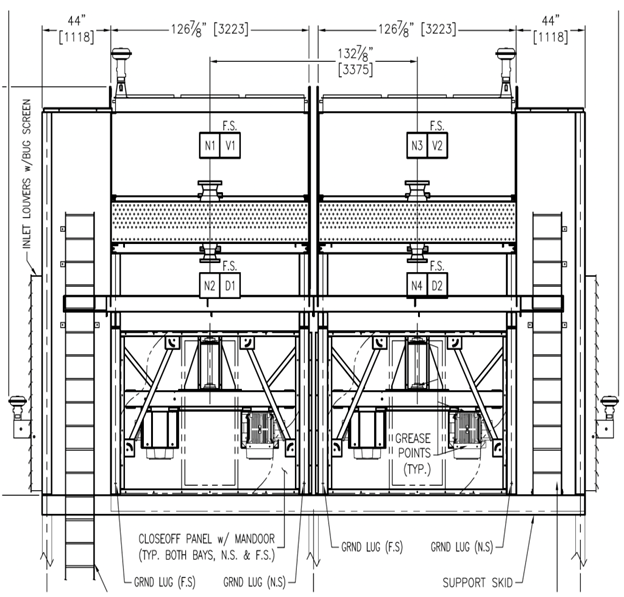
Image source: https://www.altexinc.com
An air-cooled heat exchanger (ACHE) is a type of heat exchanger used to cool fluids or gases by exchanging heat with ambient air. It consists of a bundle of finned tubes through which the hot fluid flows, surrounded by a series of fans that force ambient air over the tubes to dissipate heat. Here are some key aspects of air-cooled heat exchangers:
Design and Components:
1. Tube Bundle: The tube bundle consists of a series of finned tubes through which the hot fluid flows. The fins increase the surface area available for heat transfer, enhancing the efficiency of heat dissipation.
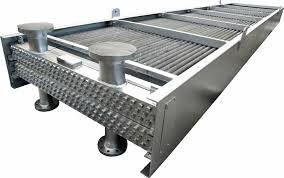
2. Fan(s): Fans are mounted above or beside the tube bundle and are responsible for drawing ambient air over the fins. The air absorbs heat from the tubes, cooling the fluid inside.
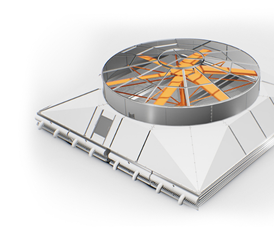
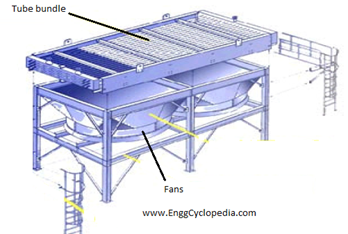
3. Support Structure: A support structure holds the tube bundle and fans in place and provides stability to the heat exchanger. It may include a framework, housing, or other structural components.
4. Motor and Drive System: Fans are typically driven by electric motors. The motor and drive system provide the necessary power to rotate the fans and generate airflow.
5. Controls and Instrumentation: Air-cooled heat exchangers may include controls and instrumentation to monitor and regulate fan speed, fluid flow rates, temperatures, and other operating parameters.
Operation:
1. Heat Transfer: Hot fluid flows through the finned tubes, transferring heat to the tube walls. Ambient air blown over the tubes absorbs this heat, causing the fluid inside the tubes to cool down.
2. Airflow: Fans create airflow over the finned tubes, enhancing heat transfer by increasing the convective heat transfer coefficient between the tubes and the ambient air.
3. Thermal Performance: The thermal performance of an air-cooled heat exchanger depends on factors such as the design of the finned tubes, airflow velocity, ambient temperature, humidity, and fouling on the tube surfaces.
4. Efficiency: Air-cooled heat exchangers are efficient in applications where water is scarce or its use is impractical, such as remote locations or industrial facilities with limited access to water.
Applications:
1. Process Industries: Air-cooled heat exchangers are commonly used in refineries, petrochemical plants, chemical processing facilities, and power plants to cool process fluids such as hydrocarbons, gases, or other volatile compounds.
2. HVAC Systems: They are also used in heating, ventilation, and air conditioning (HVAC) systems for commercial and industrial buildings to cool refrigerants in air conditioning units or chillers.
3. Natural Gas Processing: Air-cooled heat exchangers are used in natural gas processing facilities to cool natural gas streams and condense heavier hydrocarbons for separation and processing.
4. Power Generation: In power plants, air-cooled condensers are used to condense steam from steam turbines, eliminating the need for water cooling in areas where water scarcity is a concern.
Air-cooled heat exchangers offer a versatile and efficient solution for cooling fluids or gases in various industrial applications, providing advantages in terms of water conservation, cost savings, and ease of maintenance. However, careful consideration of operating conditions, ambient factors, and maintenance requirements is essential to optimize performance and ensure reliability.
Issues & Solution on Air Cooled Heat Exchanger
Air-cooled heat exchangers involve several considerations to ensure optimal performance, efficiency, and safety. Here are common issues that may arise in the Air-cooled heat exchangers along with potential solutions:
1. Inaccurate Heat Duty Calculation:
Issue: Incorrect estimation of the required heat duty can lead to undersized or oversized heat exchangers, impacting system performance.
Solution: Ensure accurate estimation of the heat duty by considering factors such as fluid properties, flow rates, temperature differentials, and operating conditions. Use appropriate heat transfer equations and software tools for calculation.
2. Inadequate Airflow Calculation:
Issue: Improper estimation of airflow rates can result in insufficient cooling or excessive fan power consumption.
Solution: Calculate the required airflow based on heat transfer requirements, ambient conditions, fin geometry, and fan characteristics. Consider factors such as fouling, altitude, and air density corrections.
3. Fouling Considerations:
Issue: Fouling on fin surfaces reduces heat transfer efficiency over time, leading to decreased performance and increased energy consumption.
Solution: Account for fouling effects in the design by incorporating fouling factors or allowances. Select materials and fin designs that minimize fouling and facilitate cleaning and maintenance.
4. Fan Sizing and Selection:
Issue: Incorrect fan sizing or selection can result in inadequate airflow or excessive power consumption.
Solution: Properly size and select fans based on airflow requirements, pressure drop characteristics, and efficiency considerations. Consider factors such as fan curve matching, noise levels, and redundancy requirements.
5. Structural Integrity:
Issue: Inadequate structural design can lead to vibration, fatigue failure, or excessive deflection under operating conditions.
Solution: Design the heat exchanger structure to withstand mechanical loads, wind loads, seismic forces, and thermal expansion effects. Conduct structural analysis and consider factors such as material strength, support spacing, and dynamic response.
6. Optimization of Fin Geometry:
Issue: Suboptimal fin geometry can result in reduced heat transfer effectiveness or increased pressure drop.
Solution: Optimize fin geometry (e.g., fin thickness, spacing, height) to maximize heat transfer performance while minimizing pressure drop and material costs. Conduct parametric studies or utilize computational fluid dynamics (CFD) simulations for optimization.
7. Thermal Expansion Considerations:
Issue: Inadequate consideration of thermal expansion effects can lead to mechanical stresses, deformation, or leakage at tube-to-header joints.
Solution: Design expansion joints, flexible connections, or slip joints to accommodate thermal expansion and contraction of tubes and headers. Ensure proper material selection and joint design to withstand thermal cycling.
8. Winter Operation:
Issue: In cold climates, freezing of condensate on the fins can block airflow and damage the exchanger.
Solution: Utilize bypass heaters or hot air recirculation systems to prevent freezing. Design the exchanger with proper drainage for condensate.
Additional Recommendations:
a) Regulatory Compliance:
Ensure that the design and calculations comply with relevant codes, standards, and regulations such as ASME Boiler and Pressure Vessel Code, API standards, or local jurisdictional requirements.
b) Quality Control and Testing:
Implement quality control measures during fabrication, assembly, and testing to verify compliance with design specifications and ensure performance reliability.
c) Lifecycle Cost Analysis:
Consider lifecycle costs, including initial investment, operating expenses, maintenance costs, and energy consumption, to optimize the design for long-term economic viability.
d) Documentation and Reporting:
Maintain comprehensive documentation of design calculations, assumptions, material specifications, and testing results for traceability and future reference.
Conclusion
Designing and calculating air-cooled heat exchangers require careful consideration of various factors to ensure optimal performance, efficiency, and safety. Common issues such as inaccurate heat duty calculation, inadequate airflow estimation, fouling considerations, and structural integrity must be addressed through appropriate solutions to mitigate risks and optimize design outcomes.
By accurately estimating heat duty, airflow rates, and accounting for fouling effects, designers can ensure that ACHEs meet thermal requirements while minimizing energy consumption and maintenance needs. Proper fan sizing and selection, along with structural integrity considerations, are essential for reliable operation under varying conditions and loads.
In essence, by addressing design and calculation challenges with appropriate solutions, engineers can enhance the reliability, efficiency, and performance of air-cooled heat exchangers, meeting operational requirements and regulatory standards while optimizing lifecycle costs and ensuring safety.
By addressing these issues and implementing the suggested solutions, designers and engineers can improve the reliability, efficiency, and performance of air-cooled heat exchangers while ensuring compliance with regulatory requirements and industry best practices.
Get detailed/ Get files/ Get customized/ Get trained by click link given here https://shreeaasaantech.com/contact-us/


