
Example of Venting Calculations According to API 2000

Excel sheet source: https://www.piping-tools.net
Venting Calculation, as per API 2000, is crucial for ensuring the safe design and operation of atmospheric and low-pressure storage tanks handling volatile liquids, such as crude oil, gasoline, or chemicals. Here’s why it’s important.
1. Safety: Venting calculation ensures that pressure buildup within the storage tanks is controlled within safe limits. Excessive pressure can lead to tank over pressurization, which may result in catastrophic failures, endangering personnel, facilities, and the environment.
2. Compliance: API 2000 provides guidelines and standards for venting and atmospheric storage tank design. Compliance with these standards is often a legal requirement and ensures that facilities adhere to industry best practices for safety and environmental protection.
3. Process Efficiency: By accurately calculating venting requirements, operators can optimize tank design and operations to minimize energy consumption and reduce operational costs associated with unnecessary venting or pressure control measures.
4. Risk Mitigation: Venting calculations consider various factors such as tank size, temperature, liquid characteristics, and ambient conditions to determine the appropriate venting capacity needed to handle potential pressure fluctuations. This helps mitigate the risks of tank overpressure and ensures the integrity of the storage systems over its operational lifespan.
Overall, venting calculation according to API 2000 is essential for ensuring the safe, compliant, and efficient operation of atmospheric and low-pressure storage tanks in industries handling volatile liquids.
Important Parameters in venting calculation according to API 2000
1. Fluid Properties: Characteristics of the stored fluids such as vapor pressure, temperature, molecular weight, and specific gravity are crucial in determining the vapor generation rate and potential pressure buildup within the tank.
2. Tank Design Parameters: This include tank size, shape, and configuration, as well as the presence of any internal or external insulation, which can affect the rate of heat transfer and temperature fluctuations within tank.
3. Operating Conditions: Factors such as ambient temperature, wind speed, and atmospheric pressure variations play a significant role in determining the pressure differentials across the tank and the need for venting to maintain safe operation conditions.
4. Emergency Scenarios: API 2000 considers emergency scenarios such as fire exposures or thermal radiation, which can significantly increase vapor generation rates and pressure buildup within the tank. Venting calculations must account for these extreme conditions to ensures adequate pressure relief.
5. Relief Device Characteristics: This includes the type, size, and capacity of relief devices such as pressure relief valves, emergency vents, or conservation vents installed on the tank to safely relive excess pressure and prevent over pressurization.
6. Venting Efficiency: API 2000 provides guidelines for determining the venting efficiency factor, which accounts for factors such as the venting device’s performance, backpressure effects, and any restrictions in the venting systems that may impact its ability to relive pressure effectively.
Issues in this excel sheet

1. The sheet no. 3 is missing from this excel sheet.
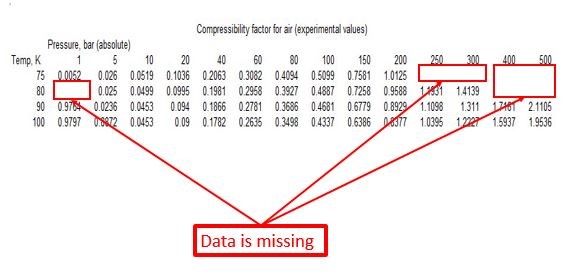
2. Some of the data is missing from the table of compressibility factor for air
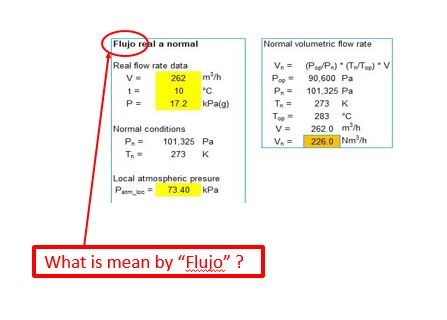
3. What is mean by “Flujo”? What is “Flujo” representing
Issues & Solution on Venting Calculation According to API 2000
API 2000 provides guidelines for the calculation of venting requirements for atmospheric and low-pressure storage tanks. Venting is necessary to prevent excessive pressure buildup inside the tank, which could lead to catastrophic failure.
Here are some common issues encountered in venting calculation according to API 2000 along with potential solutions:
1. Uncertainty in Vapor Pressure: One of the challenges in venting calculations is accurately determining the vapor pressure of the stored fluid, especially for mixtures or compositions that change over time.
Solution: Use reliable vapor pressure data at storage conditions. Conduct experiments or refer to reliable sources for vapor pressure correlations.
2. Changing Operating Conditions: Operating conditions such as temperature, pressure, and fluid composition may change over time, affecting the venting requirements.
Solution: Regularly review and update venting calculations to reflect changes in operating conditions. Implement monitoring systems to track changes in fluid properties and adjust venting requirements accordingly.
3. Complex Tank Geometries: Tanks with complex geometries or multiple compartments may pose challenges in determining the effective venting capacity.
Solution: Simplify tank geometry assumptions if possible. For complex tanks, consider computational fluid dynamics (CFD) simulations or seek assistance from experienced engineers to determine effective venting capacities.
4. Overestimation or Underestimation of Venting Requirements: Improper calculation may result in either oversized or undersized venting systems, leading to safety and operational issues.
Solution: Use conservative assumptions and follow API 2000 guidelines rigorously. Perform sensitivity analyses to assess the impact of variations in parameters on venting requirements.
5. Relief Device Sizing: Selecting the appropriate relief device size and type is crucial for ensuring effective pressure relief while minimizing emissions.
Solution: Follow API 2000 guidelines for relief device sizing based on the calculated venting requirements. Consider factors such as set pressure, relieving capacity, and backpressure.
6. Emissions Control: Minimizing emissions during tank venting is important for environmental and regulatory compliance.
Solution: Implement vapor recovery systems or conservation vents to capture and recycle vented gases. Consider installing flame arrestors and vapor combustion units to reduce emissions during emergency venting.
7. Maintenance and Inspection: Inadequate maintenance and inspection practices may compromise the performance of venting systems over time.
Solution: Develop and implement a comprehensive maintenance and inspection program for venting systems. Regularly inspect relief devices, pressure gauges, and vent lines to ensure proper functioning and compliance with regulatory requirements.
By addressing these issues and implementing appropriate solutions, operators can ensure safe and efficient venting operations in accordance with API 2000 guidelines. It’s essential to stay updated with industry best practices and regulatory requirements to mitigate risks associated with tank venting operations.
Conclusion
If the above issues in this Venting Calculation Excel sheet is solved, then this Venting Calculation Excel sheet become easy to understand and become better to use.
Accurate venting calculations ensure that storage tanks are equipped with properly sized relief devices, reducing the risk of overpressure and potential catastrophic failures. This enhances the safety of personnel, the environment, and surrounding communities.
API 2000 provides industry-accepted guidelines for venting calculations, and addressing related issues helps ensure compliance with regulatory requirements. Meeting regulatory standards avoids potential fines, penalties, and legal liabilities.
By accurately calculating venting requirements, operators can optimize the design and operation of storage tanks. Properly sized venting systems minimize unnecessary emissions, reduce energy consumption, and improve overall operational efficiency.
Get detailed/ Get files/ Get customized/ Get trained by click link given here https://shreeaasaantech.com/contact-us/


