
Issue & solution
On
Mechanical Data sheet of Vessel
Example Of Mechanical Data Sheet of Vessel
Vessel Data Sheet are required to take to ensure the safety of continuous operations and the integrity of the Vessel Data Sheet in case of corrosion, cracks and leaks.

Image source: www.chemengghelp.com
Sections:

Equipment name:
The equipment name on a data sheet typically refers to the specific device or tool being described it helps identify and distinguish the equipment within the documents
Supplier:
The section provides information about the company or entity responsible for producing or supplying the equipment mention in data sheet M/S typically stands for Manufacture/supplier
Type:
The type of vessel is measure in data sheet the meaning of this type is Flanged or Monoblock use for natural and aggressive fluid applications the compact design integrates one or two shutoff valves to separate the process from the instrument side and vent valve
Operating/Mechanical Data:
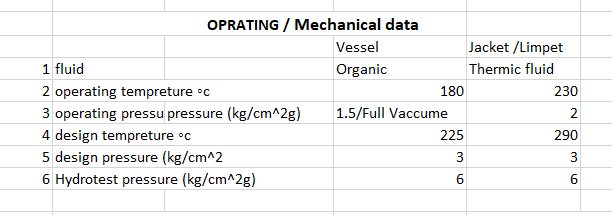
In this section you need to mention operating and design data for the vessel. this information includes like, fluid details, flow rate, operating pressure, design pressure & temperature
Shell, length, jacket:
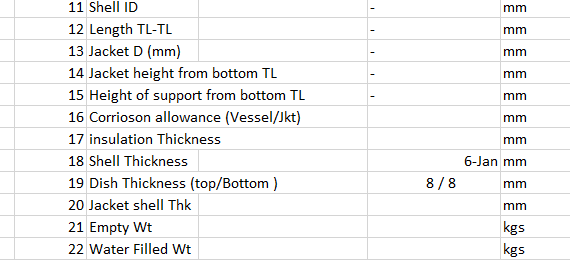
Various mechanical data comprise, corrosion allowance, insulation & type. you need to mention thickness of shell, jacket and dish ends however, fabrication can also calculate this based on your operating data
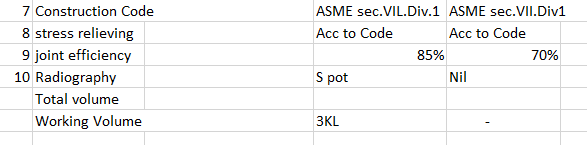
Codes and standards:
You need to be mention the vessel design code like, ASME, IS and BS
Other:
other than this you need to mention stress reliving requirement codes if required also a detail joint efficiency and radiography of critical equipment should be 100%
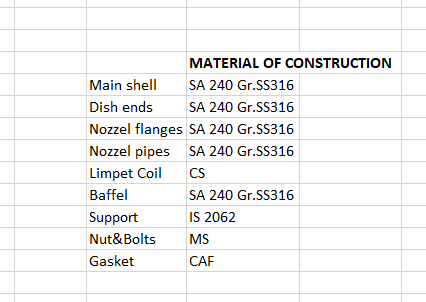
Material of construction (MOC):
In this section we provide the information regarding MOC of various part of vessel. As you can see in sketch a vessel can be divided in different parts like main shell, Dish ends, nozzle flanges, nozzle pipes support, nuts &bolts, gasket, etc.
For the economical vessel design you can select lined vessel also here you can fabricate MS vessel having stainless steel (SS) lining inside the vessel
Material of construction depends on the fluid corrosive properties erosive nature for handling slurries & pneumatic conveying ,operating temperature and pressure
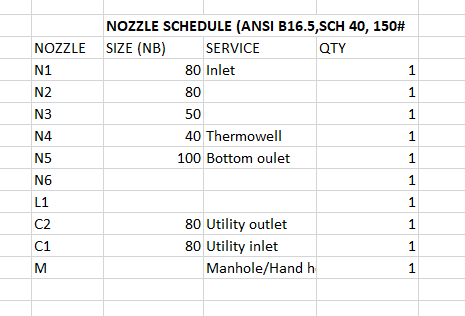
Nozzle Schedule:
Here we provide details for all the nozzles required in vessel. Commonly in every vessel we require ,inlet nozzle, outlet Nozzle manhole (in case of large diameter vessel >1.50m) handhole ,drain point, level gauge & level indicator Nozzles, safety valve nozzle, temperature and pressure indictor nozzles
Other than this many times we require light glass & sight glass Nozzles also.in nozzle details we provide the standards to follow(i.e., ASME/ANSI or BIS) for flange dimensions
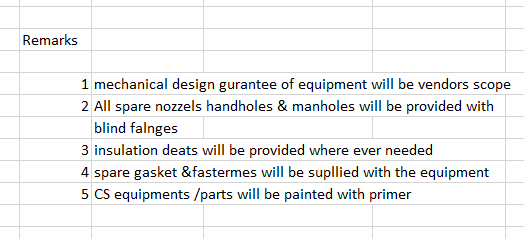
Remarks:
in this section we can provide miscellaneous information, which are common. you can see in above format there are sample comments for you reference. Based on your specific requirements this information can be customized. whole purpose here is to provide all the general clarification to the fabricator or user.
ISSUSE IN THIS DATA SHEET
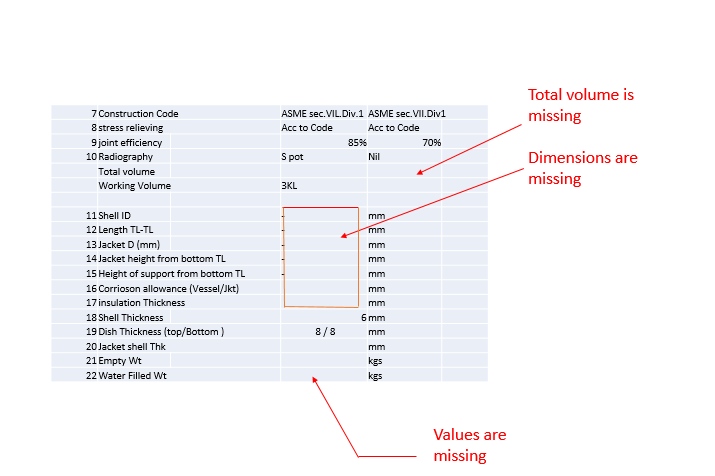
1] Issue: Total volume is missing
Solution: to address the missing total volume in the data sheet you might want to check if there is specific column or calculation responsible for it. ensure that all relevant data points are included, and if needed, recalculate the total volume based on the available information
2] issue: dimensions are missing
if dimensions are missing in the data sheet, check for a section dedicated to dimensions or specifications. if it’s not there, consult the data source or contact the responsible party to obtain the missing information
3] issue: size and service is missing
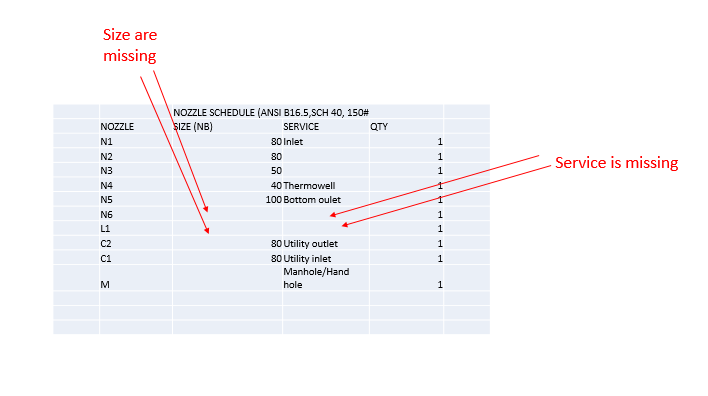
For missing nozzle size in data sheet, review the sheet for any sections related the documents for any sections related to specifications or nozzle details. If it’s not present, consider consulting the product manual, contacting the manufacturer, or referring to any associated documentations that might provide the required information about the nozzle size
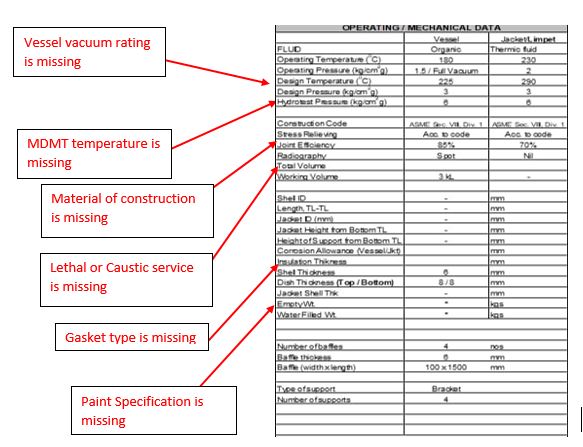
Total Issue and solution on vessel data sheet
Issues:
1] Inadequate Mixing Performance:
Insufficient agitation leading to poor mixing
2] Mechanical Failures:
Problems with agitator components, such as seals or bearings.
3] Temperature Control:
Difficulty maintaining desired temperature due to inadequate heat transfer
4] Material Compatibility:
Concerns related to the materials of construction and their compatibility with the process
5] Design Flaws:
Inadequate vessel design causing operational problems
6] Corrosion Resistance:
Lack of protection against corrosion, impacting the vessels longevity
7] Pressure and Temperature Ratings:
Failure to meet required pressure and temperature ratings can pose safety risks
Solutions:
1] Agitator Optimization:
Adjust agitator speed, design, or impeller type for better mixing performance
2] Regular Maintenance:
Implement a proactive maintenance schedule to prevent mechanical failures.
3] Heat Transfer Enhancement:
Evaluate and improve heat transfer mechanisms within the vessel
4] Material Selections:
Ensure that vessel materials are suitable for the intended process and compatible with the substances involved.
5] Redesign or Retrofit:
Address design flaws through modification or a complete redesign
6] Corrosion Protection:
Apply Suitable Coatings, use corrosion resistant material, or employ corrosion inhibitors to protect the vessel
8] Material Upgrade:
select or upgrade material based on the process requirements to enhance compatibility
Conclusion
This article will help those newcomer engineers, who are looking for the vessel Data sheet preparation. Using above Guidelines, they will be able to deliver their documents correctly.
Get detailed/ Get files/ Get customized/ Get trained by click link given here https://shreeaasaantech.com/contact-us/


