
Introduction to FEA

Phases in FEA

•Preprocessing : Understanding the Problem (Thermal, Structural, Dynamic etc)
• Element Selection (Solid i.e 3D, Shell i.e 2D, Beams ie 1D etc)
• Deciding the Boundary Conditions (Constraints, Connections etc..) Load Application (Point, Surface, Body loads etc..)
•Solution : Program derives the governing matrix equations from the model &solves for the primary quantities.
•Post processing of Results (Deflection, Stress, Strain etc..)
•Validity check of the solution.
•Report Preparation.
•Observation and Conclusion from the Analysis. (MS Calcs, Design.ok)
•Suggestion and Recommendation for Design Changes, if required.
Types of FEA analysis

1. Static Analysis: – Static analysis is used to calculate the stress, strain, and deformation of a structure under a steady or constant load. It is suitable for situations where the load is applied slowly or remains constant over time.
2. Thermal Analysis: – Thermal analysis assesses how a structure responds to changes in temperature. It helps determine temperature distributions and thermal stresses in components subjected to thermal gradients.
3. Dynamic Analysis: – Dynamic analysis evaluates how a structure responds to time-varying loads, such as vibrations or impacts. It is crucial in industries like automotive, aerospace, and civil engineering to assess dynamic behavior.
4. Fatigue Analysis: – Fatigue analysis evaluates a structure’s ability to withstand repeated loading cycles over time. It is vital in industries where components are subjected to cyclic loading, such as aircraft and automotive parts.
5. Buckling Analysis: – Buckling analysis predicts the critical load at which a structure or component becomes unstable and buckles. It is essential in the design of slender structures like columns and beams.
6. Modal Analysis: – Modal analysis is focused on determining the natural frequencies and mode shapes of a structure. It is important for understanding a system’s dynamic behavior and can help prevent resonance issues.
Why FEA for Statics Equipment
•Using Finite Element Analysis (FEA) for static equipment offers several important benefits, which include:
1. Optimizing Design: FEA allows to assess and optimize the design of static equipment such as pressure vessels, storage tanks, and heat exchangers. By simulating how these components respond to various loads and conditions to improve structural integrity and performance.
2. Safety Assurance: Static equipment is often used in critical applications, where safety is paramount. FEA helps ensure that the equipment can withstand the stresses it may encounter during operation, reducing the risk of failures and accidents.
3. Cost Savings: By simulating performance under different conditions, FEA can lead to cost savings in the design and manufacturing phases. It helps identify potential issues early, reducing the need for expensive modifications or replacements after equipment is in service.
4. Performance Enhancement: FEA provides insights into how static equipment responds to thermal, mechanical, and other loads. This information can be used to optimize designs for better performance, energy efficiency, and durability.
5. Customization: FEA allows for the customization of static equipment to meet specific project requirements. This is particularly valuable in industries with unique or highly specialized needs.
6. Regulatory Compliance: In industries like petrochemical, pressure vessels and storage tanks must adhere to strict regulatory codes (e.g., ASME, API). FEA helps ensure compliance with these codes by demonstrating that the equipment can withstand the required loads and conditions.
7. Reduced Testing: FEA can reduce the need for physical testing, which is often expensive and time-consuming. By providing a virtual testing environment, FEA can minimize the reliance on costly prototypes.
8. Failure Analysis: In cases of equipment failure, FEA can be used for forensic analysis to understand why the failure occurred. This is valuable for improving future designs and preventing similar failures.
Factors In FEA
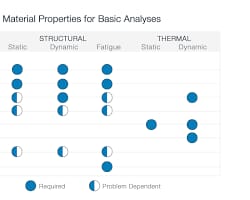
Material properties: The material properties of the equipment, such as Young’s modulus, Poisson’s ratio, and yield strength, are important inputs for FEA. These properties determine how the equipment will deform under load.
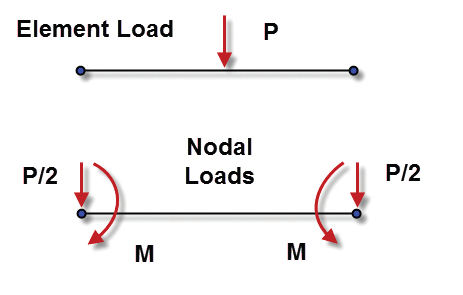
Loads: The loads that the equipment will be subjected to, such as dead loads, live loads, and environmental loads, must be carefully considered. These loads will determine the stresses and strains in the equipment.
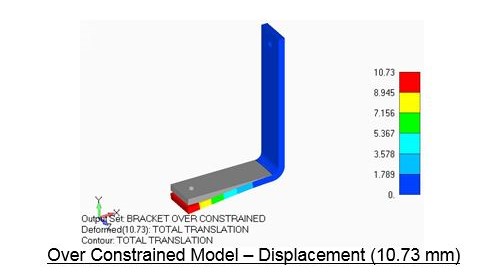
Boundary conditions: The boundary conditions of the equipment, such as how it is supported and restrained, will affect the results of the FEA. These conditions must be accurately modeled to ensure that the results are realistic.
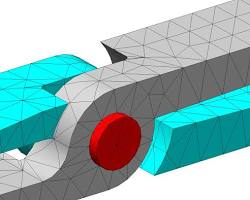
Meshing: The meshing of the equipment is important for the accuracy of the FEA. The mesh should be fine enough to capture the details of the geometry and the stress distribution.
Solver: The choice of solver is important for the efficiency and accuracy of the FEA. Thereare a variety of solvers available, each with its own strengths and weaknesses.
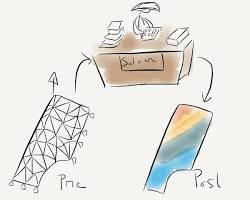
Post-processing: The results of the FEA must be carefully post-processed to extract the information that is needed. This may include visualizing the stress and strain distribution, calculating the maximum stresses and strains, and checking for failure modes.

Conclusion
• Finite Element Analysis (FEA) is a powerful tool for optimizing the design and performance of static equipment.
•FEA provides insights into how these structures will perform under various conditions, ensuring safety and reliability.
•By leveraging FEA, we can refine our designs, minimize risks, and meet stringent industry standards and codes.
• Real-world case studies demonstrate the tangible benefits of FEA in static equipment applications.
•The path forward is clear: Embrace FEA to create safer, more efficient, and compliant static equipment designs.


