
EXAMPLE OF INTERNAL PRESSURE CALCULATION OF HEAT EXCHANGER
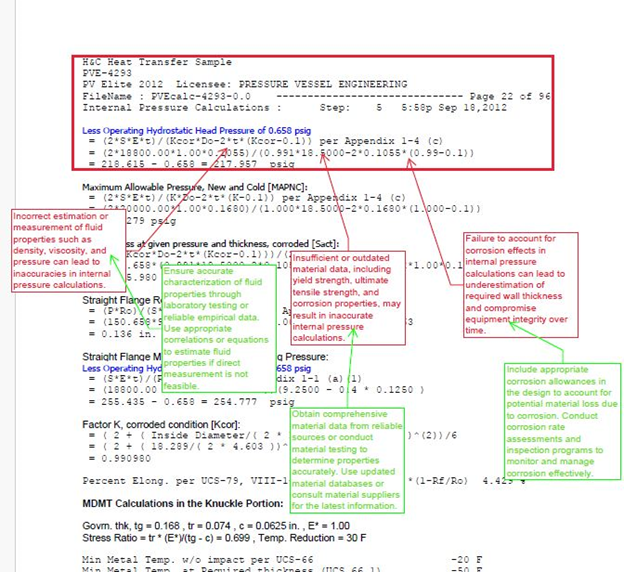
Internal Pressure of Heat Exchanger
The internal pressure of a heat exchanger refers to the pressure exerted by the fluid flowing inside the exchanger’s tubes or shell. It is a critical parameter in the design and operation of heat exchangers, as it affects the structural integrity and performance of the equipment.
In the context of heat exchangers, internal pressure is typically generated by the fluid being processed within the system. This pressure can vary depending on factors such as the flow rate, temperature, and properties of the fluid being circulated.
The calculation and consideration of internal pressure are essential in the design phase to ensure that the heat exchanger components, including tubes, tube sheets, shell, and channel head, are adequately sized and constructed to withstand the pressure without failure or deformation.
Design codes and standards, such as the ASME Boiler and Pressure Vessel Code (BPVC) Section VIII Division 1 or Division 2, provide guidelines for determining the appropriate thickness and structural requirements of heat exchanger components based on the internal pressure.
Internal pressure considerations also extend to the selection of materials, fabrication techniques, and inspection procedures to ensure that the heat exchanger meets safety standards and regulatory requirements.
Overall, understanding and accurately calculating the internal pressure of a heat exchanger are essential for ensuring its safe and reliable operation in various industrial applications, including chemical processing, power generation, HVAC systems, and oil and gas refining.
Importance of Internal Pressure Calculation of Heat Exchanger
The internal pressure calculation of a heat exchanger is of paramount importance for several reasons:
1) Structural Integrity: Internal pressure is a significant load acting on the heat exchanger’s components, such as tubes, tubesheets, shell, and channel head. Accurate calculation ensures that these components are adequately designed to withstand the pressure without experiencing deformation, rupture, or failure.
2) Safety Assurance: Proper internal pressure calculation helps ensure the safety of personnel, equipment, and the surrounding environment. It prevents overpressure situations that could lead to catastrophic failures, leaks, or releases of hazardous substances, mitigating potential safety hazards and environmental risks.
3) Compliance with Standards: Internal pressure calculations must adhere to relevant design codes and standards, such as ASME Boiler and Pressure Vessel Code (BPVC) or European Pressure Equipment Directive (PED). Compliance ensures that the heat exchanger meets industry-accepted safety and quality standards and regulatory requirements.
4) Optimized Design: Accurate internal pressure calculation enables engineers to optimize the design of the heat exchanger for efficiency, performance, and cost-effectiveness. It helps determine the appropriate thickness, material selection, and structural reinforcement needed to meet operational requirements while minimizing fabrication costs and weight.
5) Reliability and Longevity: A properly designed heat exchanger, with components designed to withstand internal pressure, ensures long-term reliability and service life. It reduces the risk of premature failures, downtime, and maintenance costs, leading to enhanced operational efficiency and productivity.
6) Risk Mitigation: Internal pressure calculation helps identify potential risks associated with pressure equipment operation, allowing engineers to implement appropriate design measures, material selection, and operating procedures to mitigate these risks effectively. It enables proactive risk management and preventive maintenance strategies.
Important parameters in Internal Pressure Calculation of Heat Exchanger
Several important parameters are considered in the internal pressure calculation of a heat exchanger to ensure its structural integrity and safe operation. These parameters include:
1) Fluid Properties: The properties of the fluid flowing through the heat exchanger, such as density, viscosity, temperature, and pressure, directly influence the internal pressure exerted on the exchanger’s components.
2) Design Temperature: The maximum expected operating temperature of the fluid inside the heat exchanger affects the material’s strength and thermal expansion properties, which in turn influence the internal pressure calculation.
3) Corrosion Allowance: Corrosion allowance is the additional thickness added to the heat exchanger’s components to compensate for material loss due to corrosion over time. It is considered in the internal pressure calculation to ensure sufficient remaining wall thickness.
4) Material Properties: The mechanical properties of the materials used in the construction of the heat exchanger, such as yield strength, ultimate tensile strength, and modulus of elasticity, play a crucial role in determining the component’s ability to withstand internal pressure.
5) Joint Efficiency: Joint efficiency accounts for the strength reduction in welded or bolted joints compared to the base material. It is considered in the internal pressure calculation to ensure the integrity of the joints under pressure loading.
6) Code Requirements: Internal pressure calculations must comply with relevant design codes and standards, such as ASME Boiler and Pressure Vessel Code (BPVC) Section VIII Division 1 or Division 2. These codes provide guidelines for determining the required thickness of heat exchanger components based on internal pressure.
7) Safety Factors: Safety factors are applied to internal pressure calculations to provide a margin of safety and account for uncertainties in material properties, operating conditions, and loading conditions.
8) Fabrication Quality: The quality of fabrication, including welding procedures, inspection techniques, and material handling practices, influences the reliability and integrity of the heat exchanger under internal pressure loading.
9) Hydrostatic Test Pressure: The heat exchanger is typically subjected to a hydrostatic test at a pressure higher than the design pressure to ensure its structural integrity. The results of the hydrostatic test may influence the internal pressure calculation.
Issue and Solution on Internal Pressure Calculation of Heat Exchanger
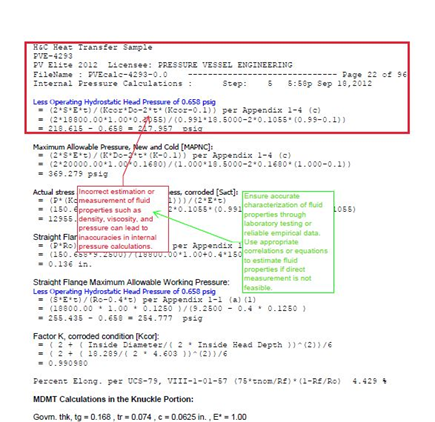
1) Issue: Incorrect estimation or measurement of fluid properties such as density, viscosity, and pressure can lead to inaccuracies in internal pressure calculations.
Solution: Ensure accurate characterization of fluid properties through laboratory testing or reliable empirical data. Use appropriate correlations or equations to estimate fluid properties if direct measurement is not feasible.
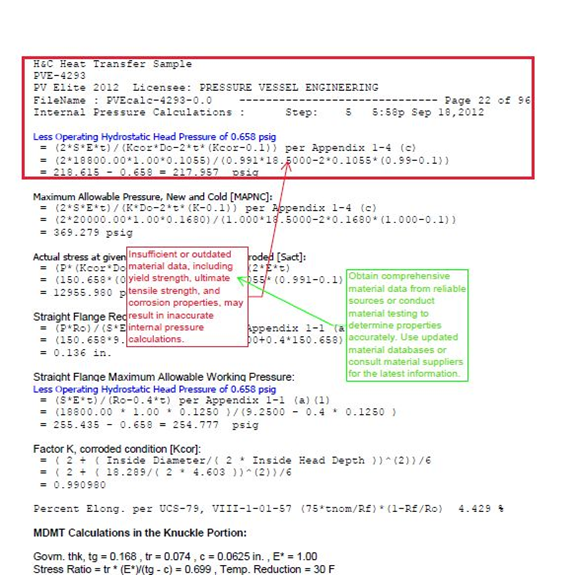
2) Issue: Insufficient or outdated material data, including yield strength, ultimate tensile strength, and corrosion properties, may result in inaccurate internal pressure calculations.
Solution: Obtain comprehensive material data from reliable sources or conduct material testing to determine properties accurately. Use updated material databases or consult material suppliers for the latest information.
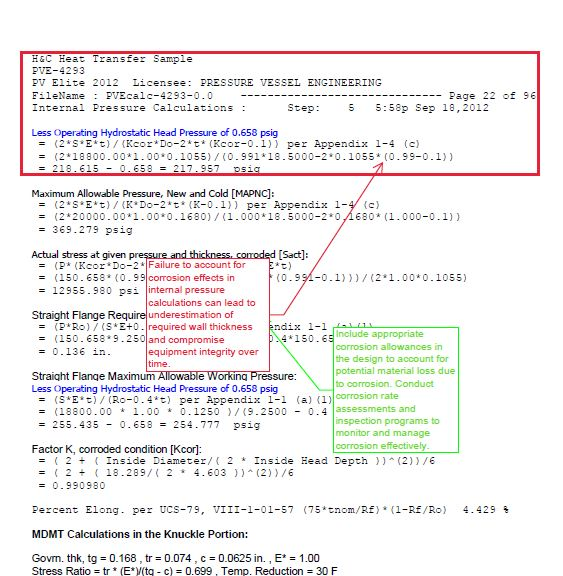
3) Issue: Failure to account for corrosion effects in internal pressure calculations can lead to underestimation of required wall thickness and compromise equipment integrity over time.
Solution: Include appropriate corrosion allowances in the design to account for potential material loss due to corrosion. Conduct corrosion rate assessments and inspection programs to monitor and manage corrosion effectively.
4) Issue: Incorrect assumptions or application of joint efficiency factors in welded or bolted joints may result in inadequate strength margins and compromise joint integrity under pressure loading.
Solution: Use appropriate joint efficiency factors based on welding procedures, material properties, and inspection methods. Verify joint efficiency through destructive or non-destructive testing as needed.
5) Issue: Non-compliance with applicable design codes and standards, such as ASME BPVC Section VIII Division 1 or Division 2, can lead to design errors and regulatory violations.
Solution: Ensure internal pressure calculations adhere to the requirements of relevant design codes and standards. Consult with qualified professionals or regulatory authorities to clarify any code interpretations or compliance issues.
6) Issue: Inadequate application of safety factors may result in insufficient margins of safety and increase the risk of equipment failure under unexpected loading conditions.
Solution: Apply appropriate safety factors to internal pressure calculations to account for uncertainties in material properties, operating conditions, and loading assumptions. Consider industry best practices and engineering judgment when determining safety factors.
Conclusion
In conclusion, accurate internal pressure calculation is crucial for ensuring the structural integrity, safety, and reliability of heat exchangers. Common issues such as inaccurate fluid properties, incomplete material data, corrosion considerations, joint efficiency assumptions, code compliance issues, and safety factor considerations can compromise the accuracy of internal pressure calculations.
To address these issues, engineers must ensure accurate characterization of fluid properties, obtain comprehensive material data, account for corrosion effects, apply appropriate joint efficiency factors, comply with relevant design codes and standards, and apply safety factors judiciously. By doing so, engineers can mitigate risks, enhance equipment safety, reliability, and regulatory compliance.
Ultimately, accurate internal pressure calculation plays a vital role in the design, construction, and operation of heat exchangers, contributing to their long-term performance and integrity in various industrial applications.
Get detailed/ Get files/ Get customized/ Get trained by click link given here https://shreeaasaantech.com/contact-us/


